Prepaid Offer — Save ₹50 on every prepaid order PREPAID10•Free Shipping on all orders across India•GMP Certified · Ayurvedic Lic. 1077/ISM/HR•Prepaid Offer — Save ₹50 on every prepaid order PREPAID10•Free Shipping on all orders across India•GMP Certified · Ayurvedic Lic. 1077/ISM/HR•

Blog
DIVYAVEDA Tea Tree Face Serum with 2% Salicylic Acid: Understanding Its Benefits for Oily and Acne-Prone Skin
Healthy-looking skin starts with understanding what your skin actually needs. For people dealing with frequent pimples, excess facial oil, blackheads and clogged pores, choosing skincare products can often feel confusing. There are countless products available, but not every formulation is designed to address the same skin concerns.
One important step is to understand the ingredients present in your skincare products and the role they play in maintaining skin health.
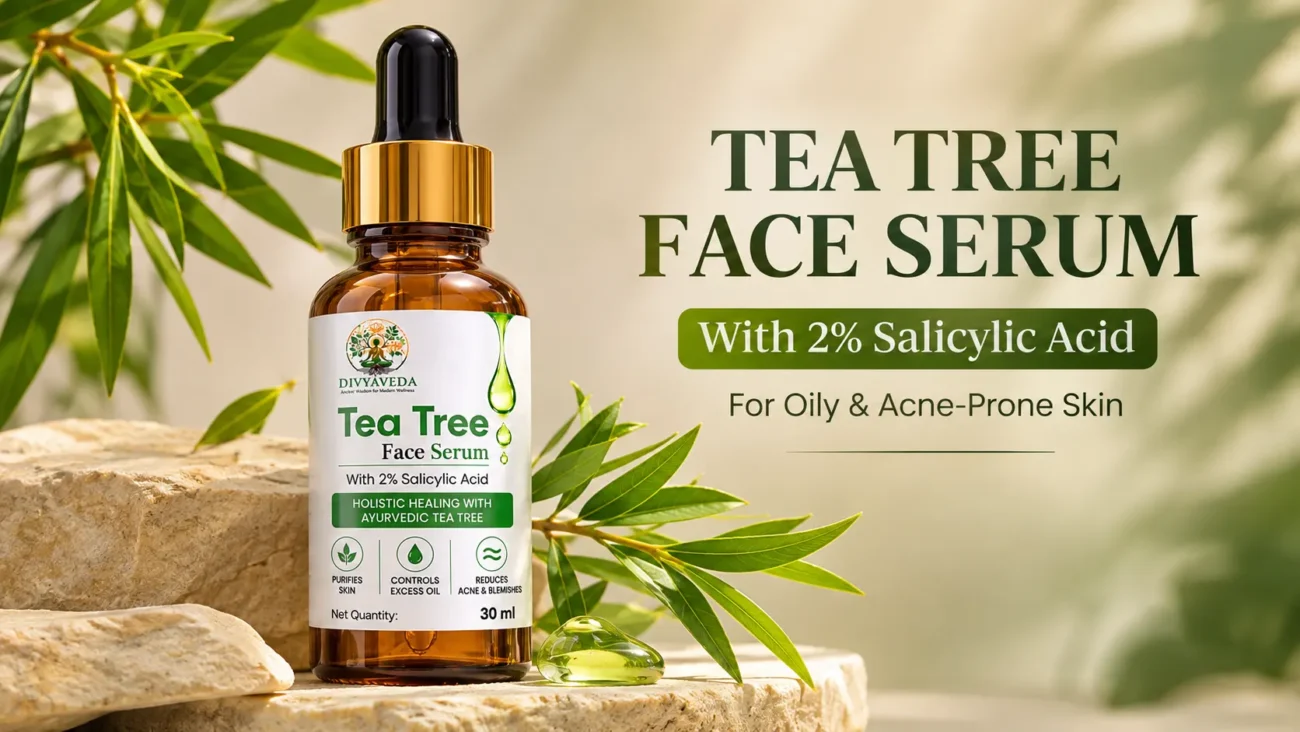
DIVYAVEDA Tea Tree Face Serum with 2% Salicylic Acid (30 ml) brings together two recognised skincare ingredients: Tea Tree and Salicylic Acid. This combination makes it an interesting option for individuals looking to build a skincare routine focused on oil management, pore care and blemish-prone skin.
In this guide, we will explore the common reasons behind acne, understand the highlighted ingredients, learn how they work and discover what makes this serum worth considering.
1. Understanding the Common Reasons Behind Acne and Oily Skin

Have you ever noticed that your face becomes oily only a few hours after washing it? Or that small bumps and blackheads keep appearing even when you follow a regular cleansing routine?
These concerns can be related to the way your skin produces oil and how dead skin cells accumulate around the pores.
Sebum is the natural oil produced by sebaceous glands. It helps protect the skin, but when excess sebum combines with dead skin cells, pores can become blocked. This can contribute to the development of blackheads, whiteheads, and acne.
Several factors may influence these concerns:
Excess sebum production: Some skin types naturally produce more oil, which can leave the face looking shiny and contribute to pore congestion.
Accumulation of dead skin cells: Skin continuously sheds old cells. When these cells build up around hair follicles, they may combine with oil and block pores.
Hormonal fluctuations: Changes in hormone levels can affect sebum production and contribute to recurring breakouts.
Individual skincare habits: Heavy or unsuitable cosmetic products may contribute to clogged pores in some individuals.
Environmental and lifestyle factors: Stress, certain environmental exposures, and individual lifestyle patterns can also influence the appearance of acne.
Understanding these factors helps explain why skincare should involve more than simply washing your face. Selecting suitable ingredients can make your daily routine more targeted.
2. What Makes Tea Tree and Salicylic Acid Important Skincare Ingredients?
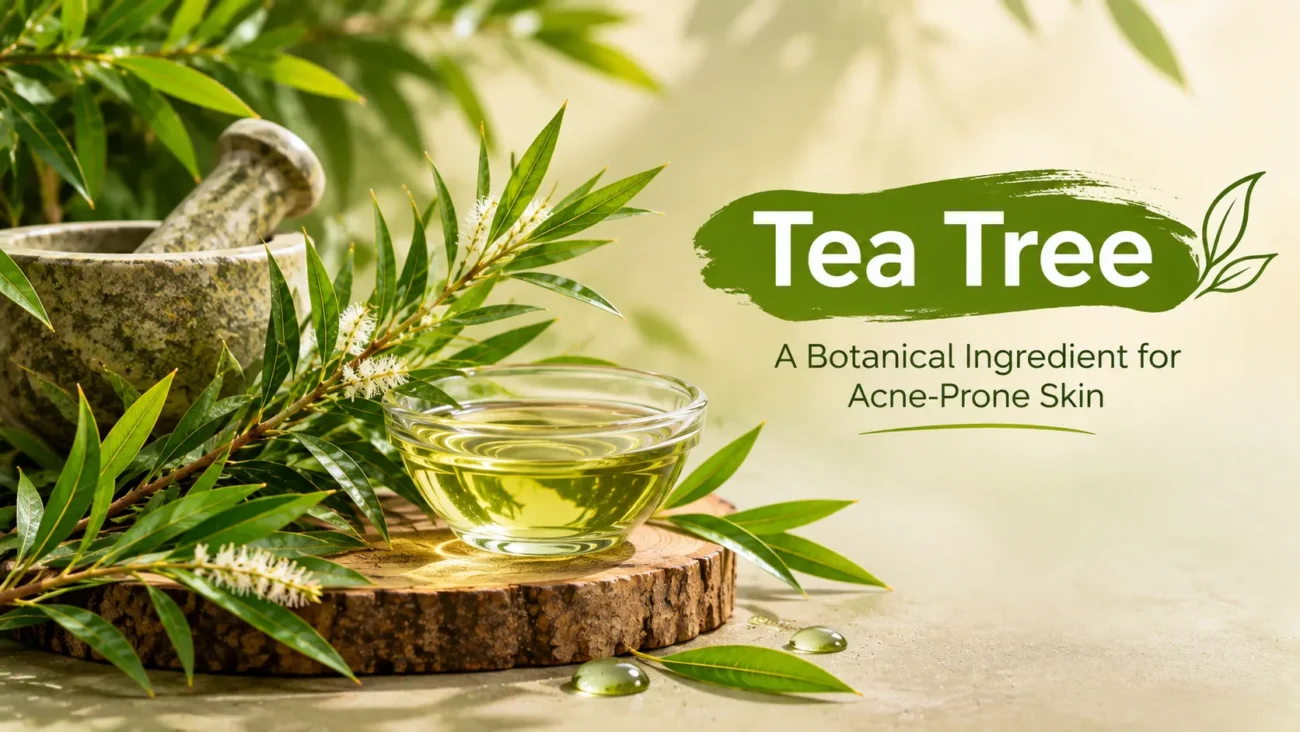
The ingredient combination is one of the main features highlighted on DIVYAVEDA Tea Tree Face Serum. To understand its purpose, let’s look at the two ingredients separately.
A. Tea Tree: A Plant-Based Ingredient Used in Skincare
Tea Tree is obtained from the leaves of Melaleuca alternifolia, a plant native to Australia. Its oil has a long history of traditional use and is now included in various cosmetic and skincare formulations.
Tea Tree oil contains naturally occurring compounds, including terpinen-4-ol. Researchers have investigated these compounds for their antimicrobial and anti-inflammatory properties.
This botanical ingredient is particularly popular in skincare products developed for oily and blemish-prone skin.
Why is Tea Tree used in skincare?
- It provides a plant-derived ingredient option for cosmetic formulations.
- Its naturally occurring compounds have been studied for antimicrobial activity.
- It is commonly incorporated into products intended for blemish-prone skin.
- It complements skincare formulations focused on maintaining a fresh and balanced-looking complexion.
Tea Tree should not be considered a guaranteed solution for acne. Its effectiveness depends on the formulation, concentration, and individual skin response.
B. Salicylic Acid: An Ingredient for Pore-Focused Skincare

Salicylic Acid belongs to a group of ingredients known as beta-hydroxy acids (BHAs). It is widely used in cosmetic products formulated for oily and acne-prone skin.
Unlike ingredients that primarily work on the surface, Salicylic Acid can penetrate oil within pores. This property makes it useful in formulations targeting pore congestion.
How does Salicylic Acid benefit the skin?
- Helps loosen pore buildup
It supports the removal of accumulated dead skin cells that can contribute to blocked pores.
- Helps with blackhead care
Its exfoliating action makes it useful in routines designed to improve the appearance of blackheads and whiteheads.
- Supports smoother-looking skin
Regular and appropriate exfoliation can help improve the appearance of uneven skin texture.
- Helps address oil-related congestion
Its ability to work within oily pores makes it a popular ingredient in products designed for oily skin.
- Supports blemish-prone skincare routines
By addressing dead skin cell accumulation and clogged pores, Salicylic Acid can help manage factors associated with certain types of acne.
DIVYAVEDA Tea Tree Face Serum highlights a 2% Salicylic Acid concentration, a commonly used strength in acne-focused skincare products.
3. How Does DIVYAVEDA Tea Tree Face Serum Work?
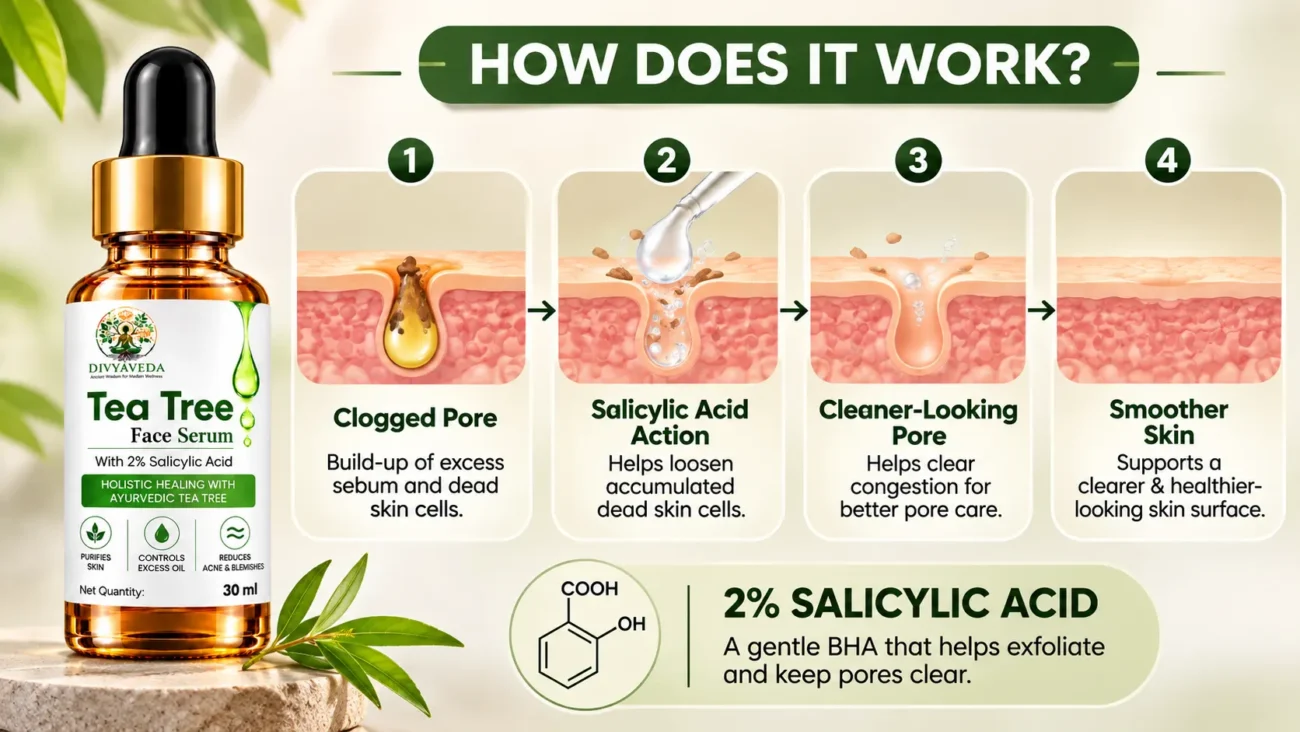
To understand the formulation, it helps to look at the different roles of its highlighted ingredients.
Imagine a skincare routine designed around two concerns: the accumulation of oil and dead skin cells inside pores, and the need for suitable botanical skincare support.
Here is how the ingredients fit into that approach.
First: Addressing pore congestion
Salicylic Acid helps exfoliate accumulated dead skin cells and loosen the material that contributes to clogged pores.
Second: Supporting skin texture
With suitable and consistent use, exfoliation can help improve the appearance of rough skin and certain types of pore congestion.
Third: Botanical skincare support
Tea Tree brings a plant-derived ingredient into the formulation. Its naturally occurring compounds have been investigated in relation to microorganisms and inflammatory responses.
Finally: A more targeted skincare routine
Together, the highlighted ingredients make the serum relevant to people looking for skincare that focuses on excess oil, clogged pores and blemish-prone skin.
The response to a skincare product is individual. Visible changes depend on skin type, formulation, frequency of application and personal tolerance.
4. What Are the Potential Benefits of DIVYAVEDA Tea Tree Face Serum?
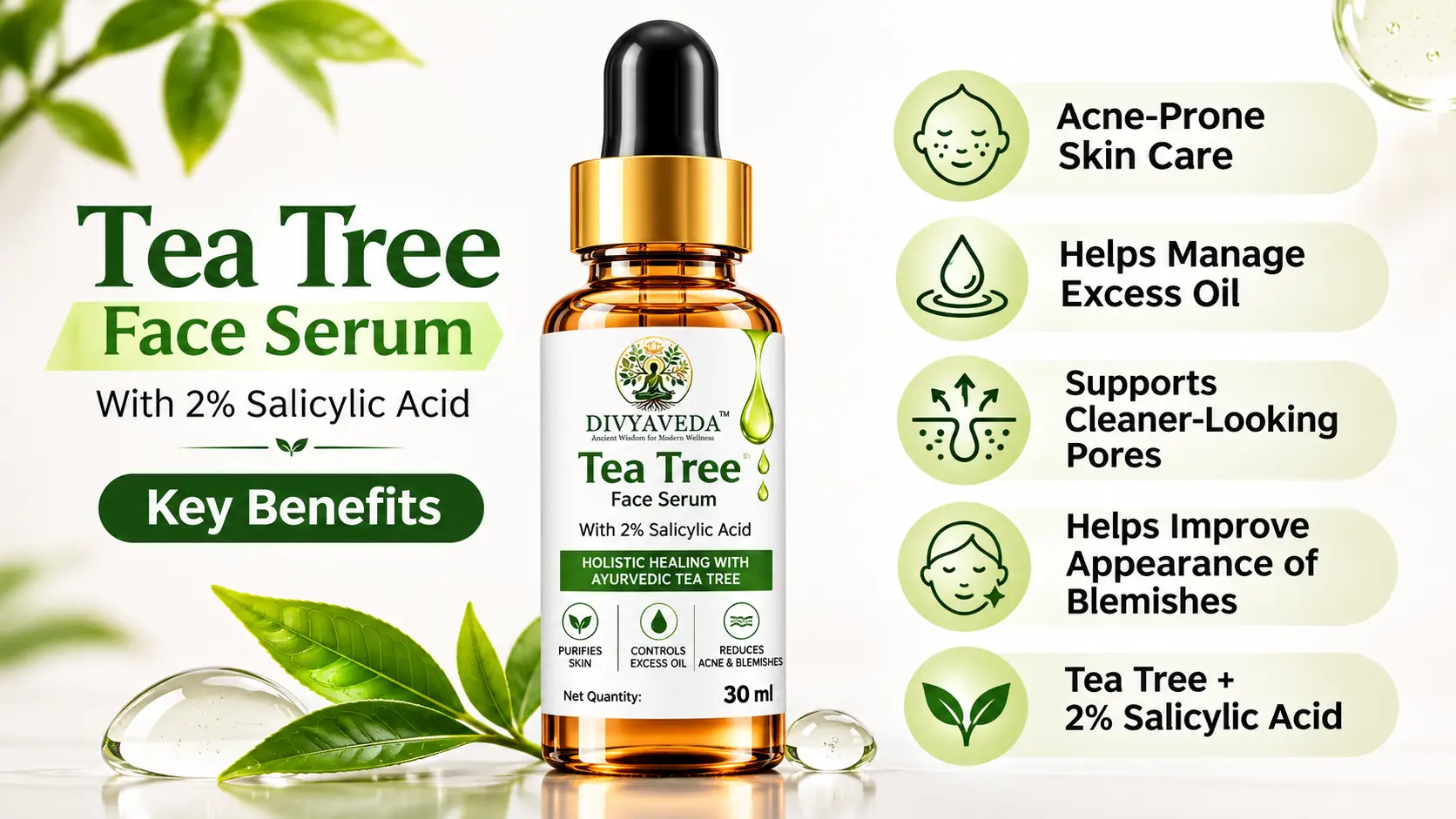
A serum should be selected according to the concerns you want your skincare routine to address. DIVYAVEDA Tea Tree Face Serum focuses on several common concerns associated with oily and blemish-prone skin.
Helps Support Acne-Prone Skin Care
People who frequently experience pimples and blemishes often look for products containing ingredients that address pore congestion. The highlighted Tea Tree and Salicylic Acid combination makes this serum relevant to such routines.
Supports the Management of Excess Oil
Salicylic Acid is widely used in formulations for oily skin. Its pore-focused exfoliating properties make it a useful ingredient to consider when managing oil-related congestion.
Helps Improve the Appearance of Clogged Pores
Blackheads and whiteheads can make skin appear uneven. Salicylic Acid helps loosen dead skin cell buildup, supporting routines that focus on cleaner-looking pores.
Supports a Smoother-Looking Complexion
Appropriate exfoliation can help reduce the appearance of rough skin texture associated with dead skin cell accumulation.
Combines Two Different Skincare Ingredients
The formulation highlights Tea Tree as a botanical ingredient and Salicylic Acid as an exfoliating active. Their different roles make this combination worth exploring for oily and acne-prone skin.
5. Is This Serum Suitable for Your Skin Type?
Not every serum is suitable for every individual. Your skin type, existing skincare routine, and sensitivity to active ingredients should all be considered.
DIVYAVEDA Tea Tree Face Serum may be worth considering if your skincare concerns include:
- An oily-looking complexion.
- Frequent blackheads and whiteheads.
- Pores that are prone to congestion.
- Occasional pimples and visible blemishes.
- Uneven-looking skin texture.
- A preference for skincare products featuring Tea Tree and Salicylic Acid.
What about sensitive skin?
People with sensitive or easily irritated skin should introduce Salicylic Acid gradually and perform a patch test before regular application.
For severe, painful or persistent acne, professional dermatological advice is recommended instead of relying only on cosmetic products.
6. Why Consider DIVYAVEDA Tea Tree Face Serum Over Random Skincare Choices?
The skincare market offers a wide selection of products, each highlighting different ingredients and benefits. Choosing between them should involve more than attractive packaging or promotional claims.
Here are five reasons why DIVYAVEDA Tea Tree Face Serum deserves consideration.
- Clearly highlighted skincare ingredients
The product highlights Tea Tree and 2% Salicylic Acid, allowing customers to understand the main ingredient focus before making a purchase.
- Focus on common oily-skin concerns
Its highlighted ingredients are relevant to skincare routines concerned with pore congestion, excess oil and blemish-prone skin.
- Botanical and active ingredient combination
Tea Tree and Salicylic Acid have different roles in skincare. Their combination provides a botanical and exfoliating ingredient approach in one product.
- Convenient dropper packaging
The 30 ml amber bottle comes with a dropper-style applicator, making it convenient to incorporate into a skincare routine according to the product directions.
- A more informed skincare decision
Rather than choosing products based only on trends, customers can consider the ingredient profile and decide whether the formulation suits their skin concerns.
The best serum is not necessarily the most expensive or the most heavily advertised one. It is the product whose formulation and directions are appropriate for your skin.
7. How to Use Tea Tree Face Serum in Your Daily Skincare Routine

Using a serum correctly is an important part of skincare. A simple routine can help you introduce the product without unnecessarily combining too many active ingredients.
Always follow the directions printed on the product packaging.
Morning Routine
Step 1 – Cleanse: Wash your face using a gentle cleanser suitable for your skin type.
Step 2 – Apply skincare products: Use the serum according to its label directions and your skin’s tolerance.
Step 3 – Moisturise: Apply a suitable moisturiser to help maintain skin hydration.
Step 4 – Protect: Finish with broad-spectrum sunscreen with SPF 30 or higher.
Evening Routine
Step 1 – Remove daily buildup: Clean your face to remove accumulated oil, dirt and sunscreen.
Step 2 – Apply the serum: Use it as directed on the packaging.
Step 3 – Moisturise: Follow with a suitable moisturiser.
Important Skincare Precautions
- Conduct a patch test before your first application.
- If you are new to Salicylic Acid, introduce it gradually.
- Avoid using several strong exfoliating products together when starting.
- Do not apply the serum to broken or irritated skin.
- Keep the product away from your eyes.
- Discontinue use if significant irritation develops.
- Use sunscreen during the daytime.
8. Why Choosing the Right Face Serum Matters
A good skincare routine is not about using the maximum number of products. It is about selecting suitable products that serve a clear purpose.
For example, someone experiencing frequent clogged pores may benefit from understanding exfoliating ingredients, while someone with dry or sensitive skin may need to prioritise hydration and barrier support.
This is why ingredient awareness matters.
Before purchasing any face serum, consider these questions:
- Does the product address your primary skin concern?
- Are its highlighted ingredients suitable for your skin type?
- Can it be incorporated into your existing skincare routine?
- Are its application directions and precautions clearly provided?
- Does the brand communicate product information transparently?
Making informed choices helps you develop a skincare routine based on your actual needs rather than following every new beauty trend.
9. Explore DIVYAVEDA Tea Tree Face Serum for Your Skincare Routine

When your skincare concerns involve excess oil, visible blemishes and clogged pores, choosing a product with relevant ingredients is a sensible starting point.
DIVYAVEDA Tea Tree Face Serum with 2% Salicylic Acid comes in a convenient 30 ml dropper bottle and highlights a combination of botanical and active skincare ingredients.
Whether you are reviewing your existing skincare products or exploring a serum for oily and acne-prone skin, take the time to understand its formulation and application directions.
Explore DIVYAVEDA and discover skincare products designed around everyday beauty and personal care needs.
Checkout Here: https://divyaveda.in/product-category/skin-care/
Frequently Asked Questions About Tea Tree Face Serum
1. What is Tea Tree Face Serum used for?
Tea Tree Face Serum is commonly used in skincare routines for oily and acne-prone skin. It may help support the care of excess oil, clogged pores and visible blemishes.
2. Is Tea Tree Face Serum good for acne-prone skin?
Tea Tree-based skincare products are popular among people with acne-prone skin. When combined with ingredients such as Salicylic Acid, they can support a routine focused on pore care and blemish-prone skin.
3. What does 2% Salicylic Acid do for the skin?
2% Salicylic Acid helps exfoliate dead skin cells, loosen pore buildup and improve the appearance of blackheads and clogged pores.
4. Can Tea Tree Face Serum help with oily skin?
Tea Tree Face Serum featuring Salicylic Acid may be suitable for skincare routines focused on excess oil and pore congestion. Individual results depend on skin type and product formulation.
5. Does Salicylic Acid help with blackheads?
Yes. Salicylic Acid is a BHA that can penetrate oil within pores and help loosen dead skin cell buildup associated with blackheads and whiteheads.
6. How often should I use Tea Tree Face Serum?
Follow the directions on the product packaging. If you are new to Salicylic Acid, start gradually and observe how your skin responds. Avoid excessive use.
7. Can I use Tea Tree Face Serum every day?
Daily use depends on the formulation, product instructions and individual skin tolerance. Start with the recommended frequency and discontinue use if significant irritation develops.
8. Is Tea Tree Face Serum suitable for sensitive skin?
People with sensitive skin should be cautious when introducing Tea Tree and Salicylic Acid products. Perform a patch test first and consult a dermatologist if irritation or sensitivity persists.
9. Can I use moisturiser and sunscreen after applying face serum?
Yes. A suitable moisturiser can help maintain skin hydration. During the daytime, finish your routine with broad-spectrum sunscreen of SPF 30 or higher.
10. Why choose DIVYAVEDA Tea Tree Face Serum?
DIVYAVEDA Tea Tree Face Serum features Tea Tree and 2% Salicylic Acid in a convenient 30 ml dropper bottle. It is an option worth considering for people looking to address oily skin, pore congestion and blemish-related skincare concerns.