Prepaid Offer — Save ₹50 on every prepaid order PREPAID10•Free Shipping on all orders across India•GMP Certified · Ayurvedic Lic. 1077/ISM/HR•Prepaid Offer — Save ₹50 on every prepaid order PREPAID10•Free Shipping on all orders across India•GMP Certified · Ayurvedic Lic. 1077/ISM/HR•

Blog
Herbal Products Manufacturer in India: A Guide for Growing Your Herbal Brand
The demand for herbal and Ayurvedic products in India has created new opportunities for businesses looking to enter the wellness, personal care, and natural healthcare markets. From herbal powders and capsules to syrups, oils, and skincare products, consumers have access to a growing variety of products inspired by traditional ingredients and practices.
For entrepreneurs and established businesses, choosing the right manufacturing partner is an important step towards building a successful herbal brand. A reliable manufacturer can help turn a product idea into a finished product while supporting formulation, production, packaging, and business requirements.
Divyaveda offers Ayurvedic and herbal product manufacturing solutions, including third-party manufacturing, private labeling, and custom product development, to support businesses looking to develop their own product ranges.

Understanding Herbal Product Manufacturing in India
Herbal product manufacturing involves developing and producing products using plant-derived ingredients and herbal formulations. Depending on the product category, this process may include ingredient selection, formulation development, processing, quality checks, packaging, and labelling.
India has a long history of traditional herbal knowledge, particularly through Ayurveda. This provides a foundation for businesses interested in developing products that combine traditional formulations with contemporary consumer preferences.
However, successful manufacturing requires more than selecting herbs and creating attractive packaging. Businesses must consider product consistency, suitable ingredients, regulatory requirements, accurate labelling, and the intended use of each formulation.
Working with an experienced manufacturer can help businesses understand these requirements and establish a more structured product development process.
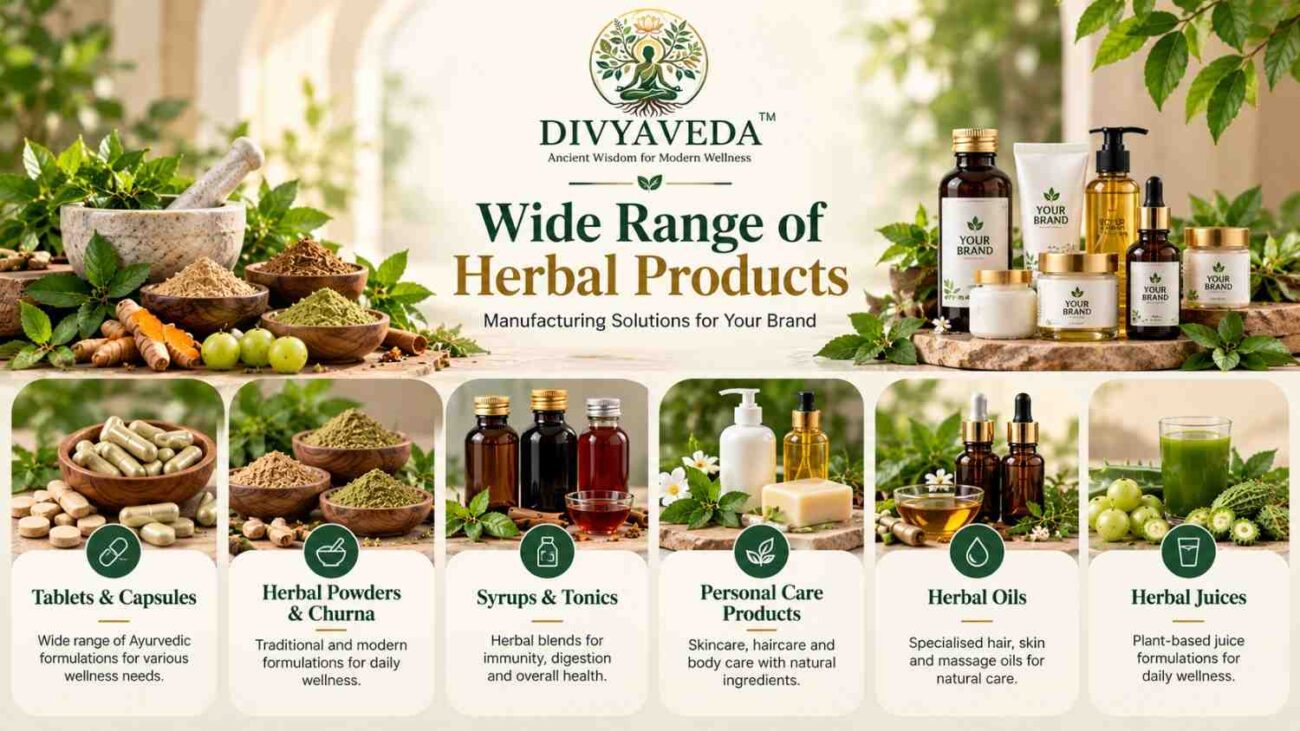
Types of Herbal Products Manufactured in India
A herbal product manufacturer may work across several categories, depending on its manufacturing capabilities, licenses, and product approvals.
1. Herbal Tablets and Capsules
Tablets and capsules are convenient formats for herbal formulations and Ayurvedic products. They are commonly used for products developed for specific wellness categories, depending on their ingredients and intended purpose.
Businesses planning to launch these products should discuss the formulation, dosage form, ingredient specifications, packaging, and applicable regulatory requirements with their manufacturing partner.
2. Herbal Powders and Churna
Herbal powders and churna are widely recognized formats in the Ayurvedic product category. They may contain individual herbal ingredients or combinations developed for specific applications.
Manufacturing considerations include ingredient identification, particle size, moisture control, blending consistency, and suitable packaging to help maintain product quality during storage.
3. Herbal Syrups and Tonics
Syrups and tonics are liquid product formats used in different Ayurvedic and herbal product categories. Their development requires attention to formulation stability, taste, packaging compatibility, and appropriate quality controls.
The manufacturing process and permitted product claims depend on the formulation and its regulatory classification.
4. Herbal Personal Care Products
The herbal personal care market includes products such as face washes, creams, lotions, shampoos, and hair oils. These products appeal to businesses interested in skincare and haircare ranges inspired by botanical ingredients.
Product development may involve selecting suitable ingredients, evaluating formulation stability, choosing packaging, and ensuring that labeling and claims comply with applicable cosmetic regulations.
How to Choose the Right Herbal Products Manufacturer in India
Selecting a manufacturing partner is a business decision that can influence product quality, launch timelines, and long-term growth. Before finalizing a supplier, consider the following factors.
Manufacturing Capabilities
Check whether the manufacturer can produce your preferred product formats. If you plan to launch multiple products, ask about its capabilities across tablets, capsules, powders, syrups, and personal care categories.
Also clarify whether the required production facilities and authorizations are available for your specific products.
Quality Control and Documentation
Ask about raw material checks, production controls, batch testing, product specifications, and documentation. Verify relevant manufacturing licences and certifications instead of relying solely on promotional claims.
Clear documentation can help businesses evaluate suppliers and maintain consistency as their product range expands.
Private Labeling and Customization
If you want to build a brand under your own name, check whether the manufacturer provides private labeling, packaging support, and custom formulation services.
Discuss the available formulations, label requirements, packaging materials, minimum order quantities, and ownership or usage terms for any customized formulation before starting production.
Transparent Pricing and Minimum Order Quantities
Manufacturing costs can vary according to ingredients, formulation complexity, dosage form, packaging, batch size, and testing requirements.
Request a detailed quotation that explains the applicable minimum order quantity (MOQ), packaging costs, taxes, payment terms, and estimated production timeline. Comparing quotations on the same specifications makes it easier to assess the overall value.
Communication and Long-Term Support
A dependable manufacturing partner should communicate clearly throughout product development and production. Timely updates, accessible documentation, and practical support can be especially valuable for startups launching their first herbal product.
Why Third-Party Manufacturing Is Useful for Herbal Brands
Setting up a manufacturing facility requires investment in infrastructure, equipment, personnel, processes, and regulatory compliance. For many businesses, third-party manufacturing offers an alternative approach.
Under this model, a business works with an external manufacturer to produce products according to agreed specifications and applicable requirements. The business can then focus more of its resources on branding, distribution, marketing, and customer relationships.
Some potential advantages include:
- Lower initial infrastructure requirements: Businesses can explore manufacturing without establishing their own production facility.
- Access to manufacturing expertise: An established partner may provide support with product formats, formulation requirements, and production processes.
- Private label opportunities: Products can be developed for sale under the business’s own brand, subject to agreed terms and regulatory requirements.
- Flexible product planning: Businesses can evaluate product categories and quantities according to their budgets and market strategy.
- More time for business development: Outsourcing production can allow teams to concentrate on sales, distribution, and customer service.
The actual benefits depend on the manufacturer’s capabilities, commercial terms, and the requirements of the products being developed.
How Divyaveda Supports Herbal Product Businesses
Divyaveda is an Ayurvedic and herbal product manufacturer based in Jagadhri, Yamunanagar, Haryana. The company offers manufacturing solutions for businesses interested in developing and supplying Ayurvedic and herbal product ranges.
Its services include third-party manufacturing, private labeling, custom product development, and bulk supply. Depending on the product and project requirements, businesses can discuss suitable product formats, formulation options, packaging, and production needs with the team.
Third-Party Manufacturing
Divyaveda provides third-party manufacturing support for businesses seeking an external manufacturing partner for Ayurvedic and herbal products. This option can be relevant for startups, distributors, wholesalers, and established brands planning to expand their product portfolios.
Private Label Manufacturing
Private labeling allows businesses to develop products for sale under their own brand identity. Divyaveda offers private label solutions, with product selection, formulation, and packaging requirements discussed according to the project.
This can help businesses plan a branded product range without independently establishing every stage of manufacturing.
Custom Product Development
Businesses with a specific product concept can discuss their formulation and product development requirements with Divyaveda. The feasibility of a customized product depends on the ingredients, dosage form, technical requirements, and applicable regulations.
Product Range and Bulk Supply
Divyaveda’s listed manufacturing categories include capsules, tablets, syrups, powders, churna, and personal care products. The company also supports bulk business inquiries.
Businesses should confirm product availability, manufacturing specifications, order quantities, and lead times directly before placing an order.

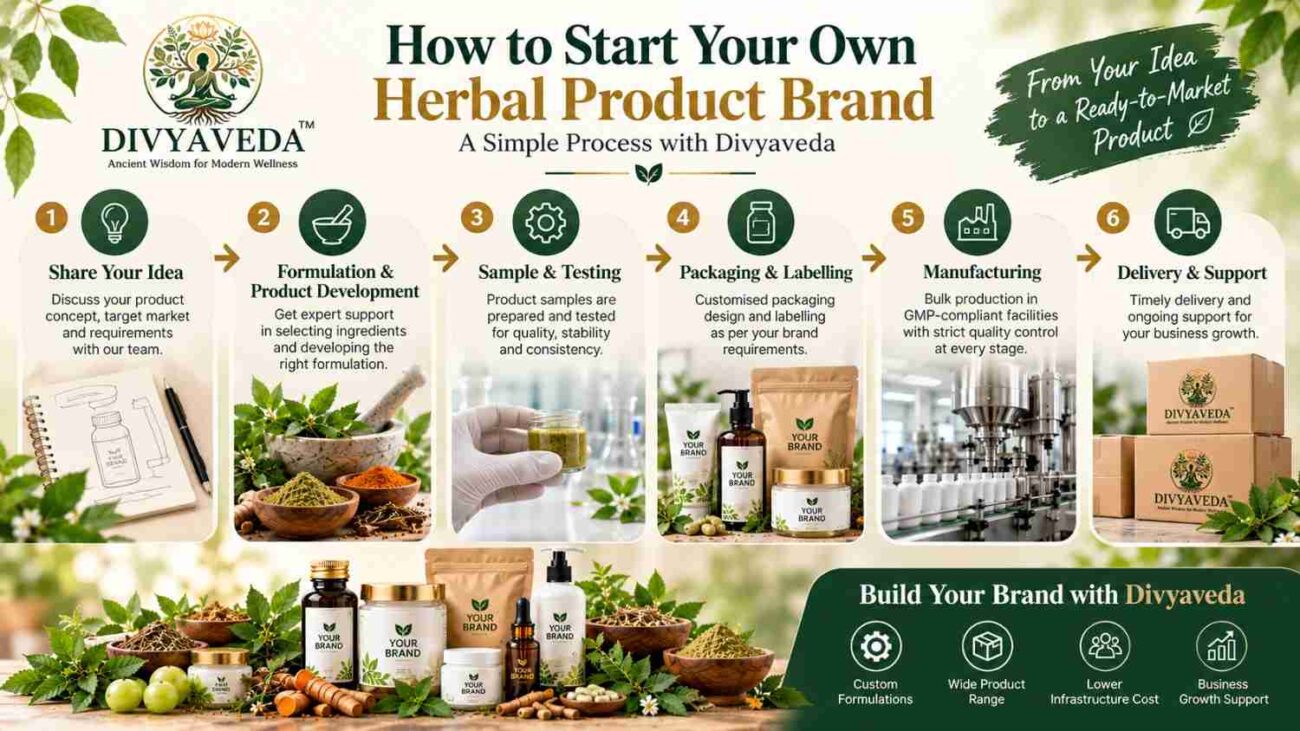
Steps to Launch Your Own Herbal Product Brand
Launching a herbal product brand becomes easier to manage when the process is divided into clear stages.
Step 1: Identify your target market. Determine whether your business will serve retail customers, online shoppers, distributors, clinics, or wholesale buyers.
Step 2: Select your product category. Decide which product formats best fit your business plan, budget, and intended audience.
Step 3: Finalize product requirements. Discuss ingredients, formulation, product specifications, packaging, and regulatory considerations with your prospective manufacturer.
Step 4: Review the quotation. Compare pricing, minimum order quantities, testing, packaging, payment terms, and production timelines.
Step 5: Approve samples and specifications. Where applicable, evaluate product samples and confirm the agreed formulation, packaging, and labelling details before production.
Step 6: Prepare for launch. Coordinate compliant labels, product documentation, distribution, marketing materials, and inventory planning before introducing the products to customers.
Following a structured process can reduce avoidable delays and help businesses prepare for a more organised product launch.
Frequently Asked Questions
1. How do I find a herbal products manufacturer in India?
Start by identifying manufacturers that handle your required product category. Review their manufacturing capabilities, relevant licences, quality processes, product documentation, private label options, and commercial terms before making a decision.
2. Does Divyaveda offer third-party herbal manufacturing?
Yes. Divyaveda lists third-party manufacturing services for Ayurvedic and herbal products. Businesses can contact the company to discuss their product requirements, quantities, and packaging preferences.
3. Can I launch my own herbal brand without owning a factory?
Third-party manufacturing and private labelling can provide an alternative to setting up your own production facility. You will still need to meet the applicable business, product, labelling, and regulatory requirements.
4. What types of herbal products can be manufactured?
Depending on the manufacturer’s capabilities and relevant authorisations, product categories may include tablets, capsules, powders, churna, syrups, oils, and personal care products. Confirm the specific product requirements with the manufacturer.
5. What determines the cost of herbal product manufacturing?
Costs depend on formulation, ingredients, product format, order quantity, packaging, testing, and other project-specific requirements. Request a quotation based on your exact specifications.
6. Does Divyaveda provide private label services?
Yes. Divyaveda offers private label manufacturing support for businesses looking to develop products under their own brand. The available options depend on the product, formulation, packaging, and order requirements.
Conclusion
Choosing the right manufacturing partner is an important step for businesses entering India’s herbal and Ayurvedic products market. A careful evaluation of product capabilities, quality processes, documentation, customisation options, and commercial terms can help create a strong foundation for long-term growth.
For startups, distributors, and established wellness businesses, third-party manufacturing and private labelling can provide practical ways to develop a product portfolio without independently building a manufacturing facility.
Divyaveda offers Ayurvedic and herbal manufacturing solutions, including private labelling, third-party production, custom product development, and bulk supply. Businesses interested in exploring these services can discuss their requirements directly with the team.
Looking for a manufacturing partner for your herbal product range?
explore its Ayurvedic third-party manufacturing services to learn more and submit your business enquiry.